.png)


Top Free Compensation Comparison Websites for U.S. Companies


A practical guide for businesses that want accurate wage data—without paying for expensive tools
If you’re trying to figure out what to pay employees, here’s the reality:
You don’t need to spend thousands on compensation software to get reliable data.
There are powerful, free tools available right now that give you real-time insights into wages, hiring trends, and job expectations.
The key is knowing where to look—and how to use them together.
Below is a curated list of the most trusted free compensation websites available today.
O*NET (U.S. Department of Labor)

Small Town WOW's favorite is O * NET. It is One of the most valuable—and underused—free resources available.
O*NET provides:
Detailed job descriptions and responsibilities
Required skills and competencies
Education and experience levels
Wage data (via Bureau of Labor Statistics integration)
Best for:
Building job descriptions
Workforce planning
Creating consistent, defensible compensation structures
For small towns and economic development teams, this is one of the most reliable sources of standardized job data in the country.
Glassdoor

Glassdoor is one of the largest free salary databases built from employee-reported data.
What you’ll find:
Real employee salary submissions
Company reviews and ratings
Interview insights
Best for: Understanding how your business compares from the employee perspective.
Indeed Salary Tool
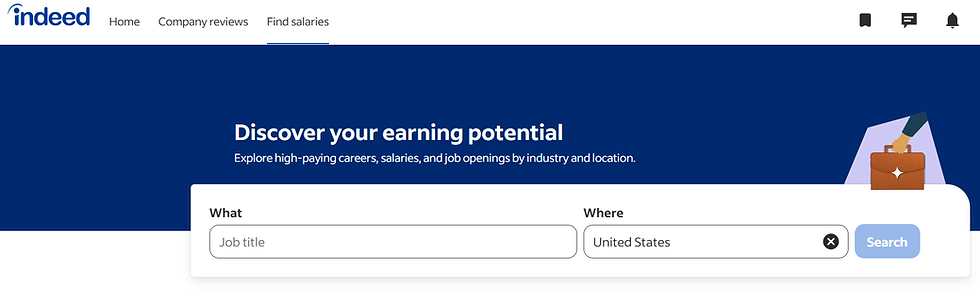
Indeed aggregates salary data from millions of job postings and user inputs.
What you’ll find:
Real-time salary data
Employer-specific pay ranges
Location-based insights
Best for: Seeing what companies are currently offering in the market.

SalaryCheck uses government-backed data to provide standardized salary comparisons.
What you’ll find:
Salary benchmarks by job title and region
Data aligned with federal labor statistics
Best for: Structured, data-driven comparisons rooted in official data.
Bureau of Labor Statistics (BLS) – Occupational Outlook & Wage Data

The BLS is the gold standard for U.S. wage data.
What you’ll find:
National and regional wage averages
Industry-specific compensation data
Employment projections
Best for: Official, government-backed wage benchmarking.
How to Use These Tools the Right Way
Most businesses make the mistake of relying on just one source.
Here’s a smarter approach:
Use multiple platforms
Cross-check at least two to three sites to validate salary ranges. Also, make sure to check your state economic development website, as many times they have their own stat dashboard for wages that break down into their counties. Here's an example for Ohio: - Defiance County, Ohio Community Stats and Wages by Position.
Adjust for your local market
National averages don’t always reflect your reality. Consider:
Cost of living
Local workforce availability
Competition from remote jobs
Look beyond salary
Compensation today includes:
Flexibility
Benefits
Work environment
Growth opportunities
Also, Compensation is no longer just an HR task—it’s a competitive strategy.
When you get it right:
You attract stronger candidates
You retain your best employees
You build a more resilient business
And the best part?
You can do it using tools that are completely free.
SmallTownWow Takeaway
You don’t need to outpay big cities.
But you do need to stay informed.
Because the businesses that win today aren’t guessing—they’re using data that’s already available to them.


Comments