.png)


Why Cities Now Send Drones to Emergencies First

Imagine calling 911 — and before a police cruiser or ambulance even turns the corner, a drone is already overhead providing live video to first responders.
That future is already here.

Cities across the United States are rapidly adopting what’s known as “Drone as First Responder” (DFR) programs, where drones are deployed immediately to emergency scenes to provide real-time aerial intelligence before officers or firefighters arrive. According to the National League of Cities, communities are increasingly embracing the technology because drones can improve response times, enhance situational awareness, and potentially save lives. (The Washington Post)
What Exactly Is a Drone as First Responder Program?
Unlike traditional police drones that are manually deployed after responders arrive, DFR systems are designed to launch automatically from strategically placed docking stations across a city.
Operators can remotely send drones to:
Traffic accidents
Fires
Missing person cases
Overdose calls
Active crime scenes
Natural disasters
In many cities, the drones arrive within minutes — often before human responders. Some departments report response times of under two minutes. (The Washington Post)
The drones stream live video back to emergency teams, helping responders understand the situation before stepping into potentially dangerous environments.

Why Cities Are Adopting the Technology So Quickly
Supporters say DFR programs are changing emergency response in major ways.
According to reporting from multiple cities already using the technology, drones have helped:
Locate missing people faster
Reduce unnecessary police escalations
Improve firefighter awareness
Monitor dangerous scenes safely
Assist during overdoses and medical emergencies
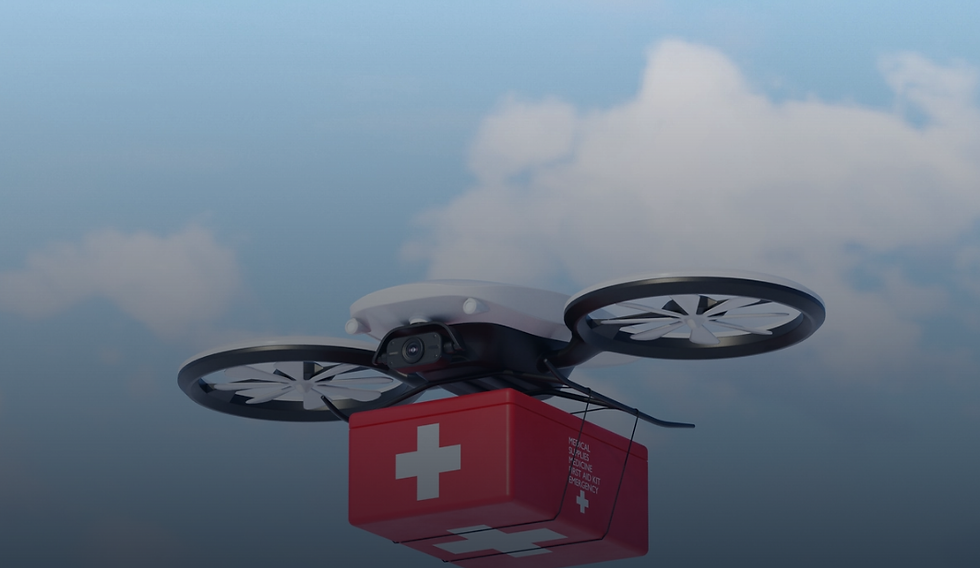
Some departments are even equipping drones with emergency supplies like Narcan for overdose response. (Laredo Morning Times)
One widely discussed example involved a drone arriving first at a reported armed suspect scene, only to reveal the individual was holding a cigarette lighter rather than a firearm — potentially preventing a dangerous escalation. (The Washington Post)
That’s one reason many cities now view drones not just as surveillance tools, but as de-escalation tools.

The Privacy Debate Is Growing Too
Of course, not everyone is comfortable with drones flying overhead.
Critics argue the rapid expansion of DFR systems raises serious questions about:
Privacy
Surveillance
Data storage
Public oversight
Civil liberties
Organizations like the Electronic Frontier Foundation have voiced concerns that constant aerial monitoring could eventually become overreaching if policies are not carefully managed. (The Washington Post)
As cities expand these programs, many are now being pushed to establish:
Transparent operating policies
Public accountability systems
Strict data retention rules
Clear limitations on drone usage
The technology may be advancing quickly, but public trust still matters.
Why Small Towns Should Pay Attention
While most DFR programs are currently launching in larger cities, smaller communities could eventually benefit too.
For rural and small-town emergency services, drones may help overcome challenges involving:
Long response times
Limited staffing
Large geographic coverage areas
Search-and-rescue situations
Severe weather response
A drone can cover ground much faster than a vehicle in certain situations — especially in rural areas, parks, forests, or large community events.
And as the technology becomes more affordable, experts believe more local governments may begin exploring drone-assisted public safety programs.
The Bigger Picture: Cities Are Becoming Smarter
The rise of DFR systems also reflects a much larger trend happening nationwide:
Cities are increasingly integrating technology into public safety and infrastructure.
From AI traffic systems to smart sensors and connected emergency services, communities are looking for ways to respond faster and operate more efficiently.
Drone programs are becoming part of that broader “smart city” movement.
And whether people see that as exciting or concerning probably depends on how responsibly the technology is used.
One thing is clear, though:
The next generation of first responders may not arrive on four wheels.
They may arrive from the sky.
Check out the YouTube Video of a DFR in action:


Comments